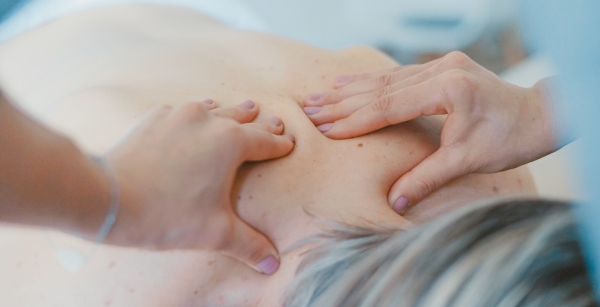
This is an article about the positive effects that massage can have on your body and how it can aid various body functions.
General circulation
All cells in the body need a good supply of blood for growth, repair, nutrition and the removal of waste products. Stroking techniques of massage stimulate this, aiding circulation as well as being beneficial to the local tissue area. In this way massage can improve recovery and be good for your health.
The blood is pumped from the heart through arteries, growing ever smaller and smaller to become tiny arterioles on a cellular level. It is then drawn back towards the heart through veins which begin as tiny capillaries merging with the arterioles, increasing in size as they get nearer in their journey to the heart. Blood flows can slow in limbs as the pressure of the blood is weaker therefore it is important to enhance some circulatory processes with massage.
It is necessary when using massage to apply pressure using long strokes in the same direction as the venous return (towards the heart). Pressure strokes shouldn't be applied in the opposite direction as this would push blood against the direction of flow causing damage to vessel walls.
Micro circulation
Massage can be useful for blood flow on a smaller level. As massage strokes force blood through capillaries and arterioles it can have a stretching effect on vessel walls keeping it soft and pliable. This can help to increase their size, capacity and function.
Lymphatic flow
Lymphatic vessels aren't part of the circulatory system as they begin at a cellular level and travel in one direction (towards the heart). Their purpose is to absorb excess interstitial fluid and return it via lymph nodes to the heart. This filters out waste and toxins. The demands on the lymph system are therefore greatest after injury, hard exercise or other medical conditions.
As the lymph system isn't part of the circulatory system they have no intrinsic pressure moving them and instead rely on muscle contraction (which is often limited when following an injury) and gravity can have negative effects especially for the lower leg.
Interstitial permeability
The movement and containment of bodily fluids is controlled by various tissues, having tiny pores to allow certain chemicals to pass and others held back. However if the structures become fibrous many pores may close and the interstitial fluids will suffer. Massage aids this by forcing the fluids through these tissues with strong strokes, opening pores and improving flow.
Scar tissue
With tissue damage, bleeding will take place which eventually results in scar tissue. This is important in the initial healing process but if too much bleeding occurs, excessive scar tissue forms, inflaming the area and can become hard. In extreme cases scar tissue has known to become as hard as bone and in this case surgery is the only answer.
To prevent excess scar tissue, friction massage techniques aim to prevent its formation by stopping the cells binding unnaturally together. Friction massage can also work on already formed scar tissue to break it down into smaller pieces (here it is digested by phagocyte cells and absorbed by the lymph system).
Adhesions and fibrous tissues
This is the real problem in tissue function. When adhesions and fibrous tissues form created by scar tissue, the tissues bind together and restricts muscle movement. Muscles need to be able to glide smoothly over each other in order to function properly and with adhesions, this cannot happen.
Even non-contractile tissues can be affected by fibrous adhesions as well as in different structures such as ligaments, tendons and bones leading to severely restricted movement and function.
Transverse strokes and friction massage techniques can break down the adhesions by literally tearing the bonds apart. Once they are separate they can repair properly and will be able to function again. The massage process can however be understandably painful but there is no real damage done as adhesions themselves contain no blood vessels. Friction massage can also help loosen knotted muscles and allow blood to flow more easily through it, stimulating healing.
Tissue flexibility
Massage can also stretch more specific locations of tissue in a way that may not be possible with function exercise and stretching. Regardless of the functional range, deep longitudinal strokes can stretch tissues, drawing them apart and moving them in all directions. This gives patients a great range of movement which is especially important for athletes.
Nervous system
Massage can also affect the nervous system. It stimulates nerve receptors in tissues which control tissue tension. Mechano-receptor nerves respond to touch, pressure and warmth so are also stimulated. This can have a reflex affect, cause relaxation of the tissues and reduce pain. The fact that muscular tension and the nervous system are so inextricably linked is why non-physical stress (emotional) can create physical symptoms.
By releasing tension massage can restore the balance and stimulate the parasympathetic system having a positive effect on both minor and major conditions such as high blood pressure, migraines, insomnia and digestive disorders.
Article by:
Gemma Carter is a fully trained fitness and life coach. Visit her website at http://www.cartercoaching.co.uk
